Why Revenue Is the Wrong Number to Chase
A contractor can bill a million dollars a year and take home less than his employees. The reason nobody tells him is hiding in plain sight.
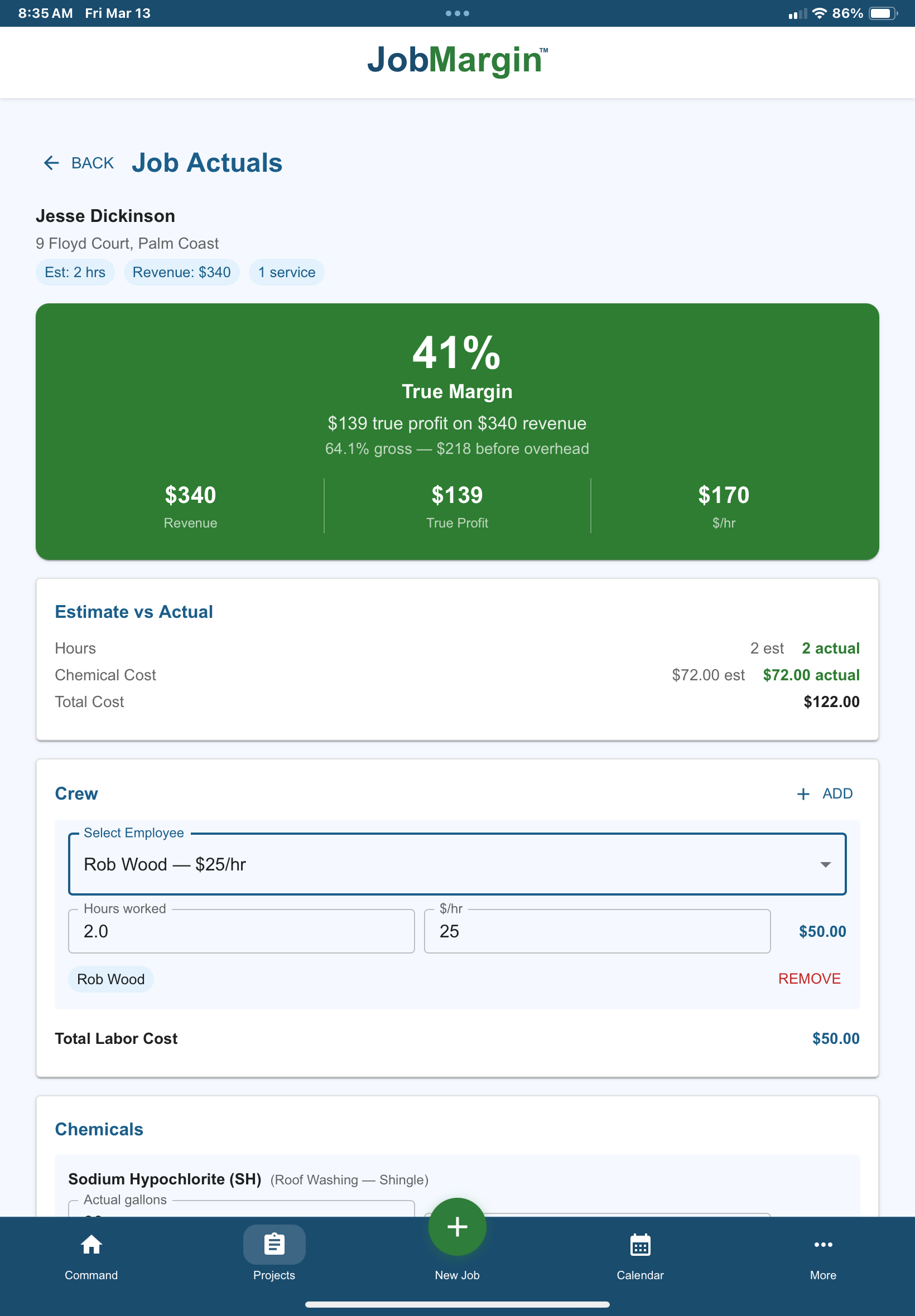
A contractor can bill a million dollars a year and take home less than his employees. The reason nobody tells him is hiding in plain sight.
Every contractor has been asked the question. At a family dinner, at a barbeque, at church: "How's business?"
And every contractor answers with a revenue number.
"Had a good month — billed $40,000."
"On track for a million this year."
"Trailing twelve is $800,000 and climbing."
The revenue number is the scorecard. It's what gets talked about, compared, celebrated, worried over. Contractors who hit a milestone revenue number feel like they've arrived. Contractors who slip below it feel like something's wrong.
But revenue is a misleading scorecard. A contractor can run a million-dollar business and clear less than a truck driver. Another contractor can run a quarter-million-dollar business and take home more than a mid-career engineer. The revenue number alone doesn't tell you which one you're looking at.
This matters because most service businesses are being graded — by the owner, by the owner's family, by the owner's peers — on the wrong number. And the wrong number is steering decisions that make the business busier without making it more profitable.
Here's a real example. Not hypothetical. A painting contractor I know — running crews, managing schedules, doing solid work for seven years.
His payroll runs about $8,000 a week. Four weeks a month, that's roughly $32,000 a month in just labor. On top of that he's got paint, primer, rollers, brushes, all the consumables. Sprayers, ladders, drop cloths, equipment wear. Trucks, fuel, insurance. Marketing, software, accounting. Estimating time he doesn't bill for, crew training, scheduling friction on jobs that got rescheduled.
All in, he could bill a million dollars in revenue for the year and clear about $100,000. That's 10% net. Not 10% of a healthy business — 10% after all the risk, all the hours, all the management headaches, all the customer issues, all the crew drama, all the late-night billing.
A hundred grand is fine money. It's not bad money. But a million in revenue with ten percent net means that contractor is carrying nine hundred thousand dollars of risk for the take-home of a mid-career professional at a desk job with benefits and paid vacation.
That's not what he thought he was building.
The fix isn't more revenue. The fix is understanding what his numbers are actually telling him, so he can move toward a better business — not a bigger one.
In most service businesses running thin margins, the problem is labor cost as a percentage of revenue.
A healthy target in most contracting trades is labor cost somewhere in the 30-40% range. The exact number varies by trade — trades with heavy materials (painting, paver sealing, some concrete work) can carry slightly higher labor because materials absorb a bigger chunk of the bid. Trades with light materials (lawn care, window cleaning, residential pressure washing) should have labor closer to the lower end.
When labor cost is running 50% of revenue, a contractor is handing half of every job to his crew before a dollar of materials, a dollar of overhead, or a dollar of profit gets counted. That math doesn't work. There's no way to finish the job at a healthy net margin when half the revenue is gone before you start.
The painting contractor above is running labor at 50%. The target for a business like his is closer to 35%. That 15-point gap is where most of his lost margin is hiding.
There are only two ways to close a labor cost gap of that size: increase revenue per crew-hour (through pricing, efficiency, or upsells), or decrease labor cost (through crew reduction, productivity improvements, or restructured compensation).
Most contractors try the first one. They push for more jobs, higher prices, upsells on every bid. Sometimes it works. Often it just makes the business busier without moving the labor percentage — the crew grows along with the revenue, and the ratio stays the same.
The harder decision is the second one. Restructure the crew. Let someone go. Run leaner for a few months, push the schedule out, let customers wait a little longer — and protect the margin.
That's the decision the painting contractor above is working through right now. Not a small decision. Not an easy one. But when the math shows that your business is going to keep handing half of every dollar to payroll no matter how much revenue you generate, at some point you have to change the inputs.
Most contractors resist pushing their schedule out because it feels like they're losing ground. A customer who has to wait five weeks for work, instead of three, might go with a competitor. That's real. It happens.
But the math on running a schedule five weeks out at healthy margin vs running three weeks out at thin margin isn't even close. A healthy-margin contractor generating $600,000 with 25% net takes home $150,000. A thin-margin contractor generating $1,000,000 with 10% net takes home $100,000.
Same take-home gap, or better, with 40% less revenue. Smaller business, smaller headaches, smaller crew, fewer customer issues, less everything — and the same or better money in the owner's pocket at year end.
The contractor who pushes his schedule out a week or two, raises his prices, and tightens his crew is making a trade that looks like losing on the revenue line but winning on the take-home line.
Nobody shows this trade at the family dinner. The only number anyone asks about is the revenue number.
Revenue became the scorecard because it's the number everyone can see.
It shows up on the invoice. It flows through QuickBooks whether you like it or not. It's the first question the accountant asks, the first question the banker asks, the first question a fellow contractor asks at a trade show. Revenue is public and comparable. Take-home is private and complicated.
There's also a cultural weight to it. A contractor hitting a million in revenue sounds like he's made it. A contractor hitting a quarter-million doesn't. Nobody hears the second number and thinks "oh, good for him, he's probably taking home more than the first guy." They hear "quarter-million" and their brain rounds down.
So contractors chase the public number instead of the private one. They take on jobs to push revenue, even when the job is margin-thin. They add crew to increase capacity, even when the new crew doesn't improve the margin. They expand into new trades or new service areas, even when the added complexity drains more than the added revenue produces.
Every decision is optimized for the scorecard that's visible instead of the one that actually matters.
The contractor who reverses this — who ignores the revenue number at the family dinner and focuses on take-home — has to accept that he'll be congratulated less often. His revenue number will sometimes shrink. His peer group might wonder if something's wrong. His accountant might even ask why he turned down work.
The reward is a business that actually pays him. The scorecard that matters.
Most of what gets missed in the revenue chase is indirect cost — the expenses that keep the business alive but don't attach to any individual job.
A contractor pricing a job looks at materials and labor. He adds a markup he feels good about. He sends the quote. What he's not looking at — because it's not on the estimate screen — is the hour-by-hour cost of running the business underneath every job.
For my pressure washing operation, running that math came out to $59.63 per hour. Every hour the truck is out, that's what it costs me to exist as a business, before any direct cost on the job.
The painting contractor above has his own indirect number, and it's probably higher than mine because his overhead is larger — more crew, more trucks, more insurance, more equipment, more everything. When he's not seeing that number on every estimate, he's guessing at whether each job covers it. Most of the time it covers it. Sometimes it doesn't. The jobs that don't cover it are invisible losses that show up in the take-home gap at year end.
This is how a million-dollar business delivers 10% net. Not through one big mistake. Through a year's worth of small margin leaks on jobs that looked profitable on the estimate but weren't profitable in reality — because the estimate didn't show the real cost of doing the work.
A contractor who stops chasing revenue and starts chasing take-home makes different decisions.
He turns down jobs that look profitable on paper but thin out his margin. He raises prices on the recurring customers he's been underpricing. He restructures his crew when the labor percentage shows him he has to. He pushes his schedule out instead of adding heads. He says no to the bottom-of-funnel customer who's going to take up the most phone time and pay the least.
He also starts answering the family-dinner question differently. "How's business?" stops being a revenue report and starts being a margin story. "Business is good — we're clearing 25% on everything we do." That's a real answer. That's a contractor who knows his numbers.
The million-dollar painting contractor isn't doing anything wrong, exactly. He's running a real business with real crews and real customers and real work getting done. He just has the wrong scorecard up on the wall. The fix isn't more revenue. The fix is a clearer view of the numbers underneath the revenue, so he can make the next set of decisions from a position of clarity instead of guessing.
Revenue is the wrong number to chase because it doesn't tell you what you're keeping. Take-home is the right number because it does.
Run the math on your own business. Figure out what percentage of every dollar you bring in is actually landing in your pocket at year end. If that percentage is in the single digits, the answer isn't more revenue. The answer is a different kind of business.
Start a free trial. No credit card. Cancel anytime.